Forklift Daily Inspection Checklist (OSHA-Aligned, Printable)
OSHA requires a forklift examination before every shift, at least daily. Use this pre-shift checklist and know which items your employer's own list must cover.
Quick answer: OSHA requires a forklift to be examined before being placed in service, at least daily — and after each shift where trucks run around the clock. If the examination finds any condition affecting safe operation, the truck stays out of service until it is fixed. There is no single OSHA-mandated checklist form; the items below are the checks industry checklists commonly cover, and your employer's own list governs. Official source
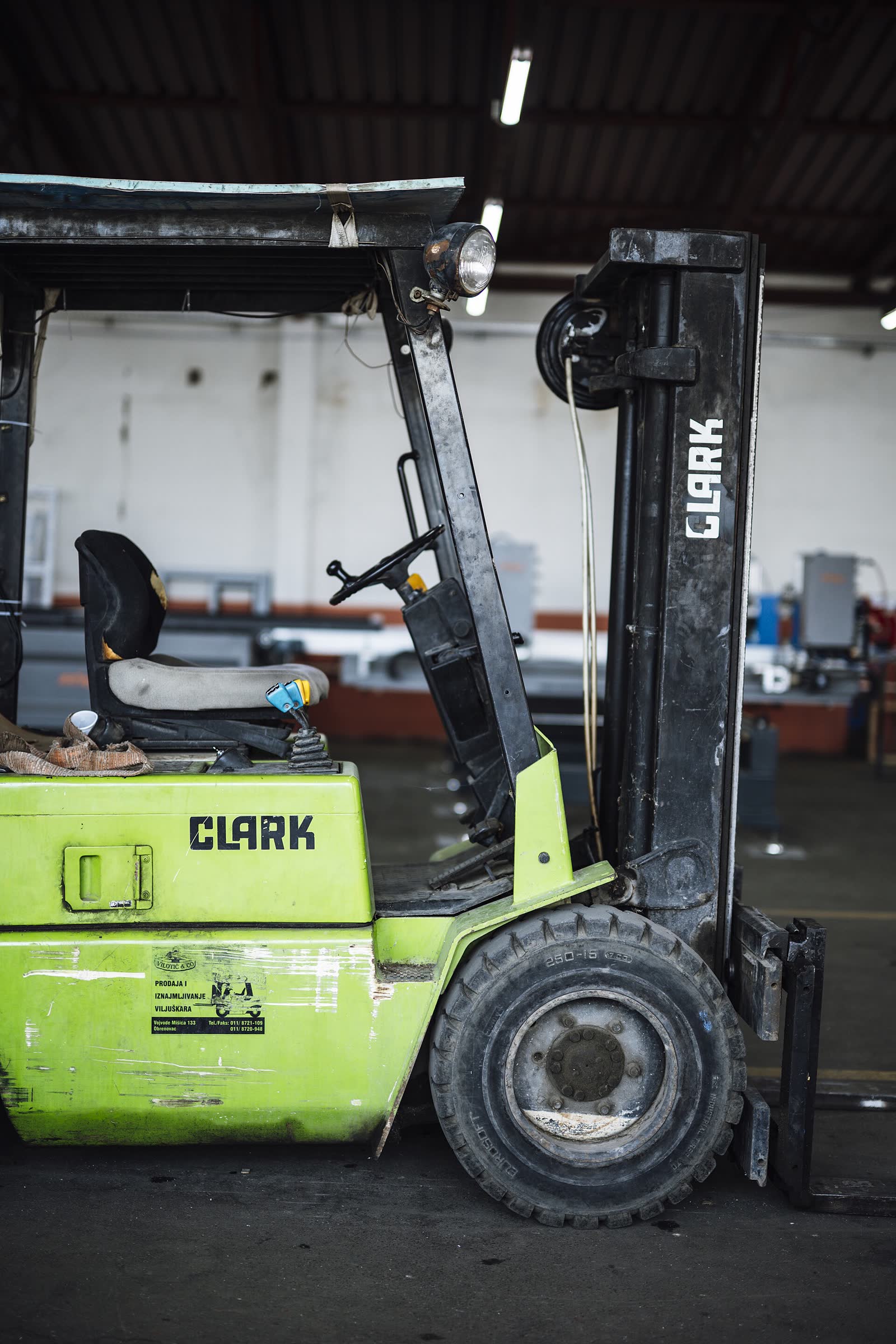

What the standard actually requires
The legal duties are short and absolute — everything else in a checklist is how your employer implements them:
- Examine before being placed in service, at least daily.
- Round-the-clock trucks: examine after each shift.
- Any condition adversely affecting the safety of the vehicle = do not place it in service.
- Defects found are immediately reported and corrected.
- Repairs are made by authorized personnel only. Official source
If at any time a truck is found in need of repair, defective, or in any way unsafe, it is taken out of service until restored to safe operating condition — the rule that gives the checklist its teeth. Official source
The pre-shift checklist
Work top to bottom with the truck off, then again with it running. Items marked (L) are checked with the engine or power off, (R) with it running.
With power off (walk-around):
- Tires: cuts, gouges, missing chunks, proper inflation on pneumatic trucks
- Forks and carriage: no cracks, bends or excessive wear at the heel; position locks work
- Mast, chains and hoses: chain tension even, no kinks, no visible hydraulic leaks
- Overhead guard and load backrest: bolts tight, no cracked welds
- Battery: secured, connections clean, charge sufficient; no electrolyte smell or corrosion
- LP tank (propane trucks): tank mounted properly, no damage, hose not chafed
- Counterweight and data plate: present and legible — see loads and stability for why the plate governs
With power on (function checks):
- Horn and other audible devices work
- Lights, headlight and tail/brake lights work
- Brakes: pedal feels firm, truck stops in a straight line; parking brake holds
- Steering: no excessive free play, no unusual noise
- Hydraulics: lift, tilt and side-shift travel smoothly, no drift under load
- Gauges and instruments: fuel/charge level, hour meter, no warning lights
- Seat belt or operator restraint: latches and retracts
After the engine check, watch for exhaust sparks or flames, unusual smoke, or any part running abnormally hot — each is an immediate out-of-service trigger. Official source
Who checks, who signs, who keeps the record
The standard assigns the examination duty to the employer — most warehouses have the operator complete the checklist at shift start, with maintenance reviewing and signing off defects. Checklists are kept as records: during an inspection, "we check them every day" without a signed sheet is indistinguishable from not checking. Community report
If the checklist fails
Any item that fails = the truck does not go into service. Report it immediately, tag it out, and let authorized personnel make the repair. The rules operators most often break here are procedural: finishing the shift first, or topping a leak with a rag. Both are exactly what 1910.178(p) and (q) remove from your discretion — drill the inspection and maintenance section to see how these rules are tested, then sit the practice test to check the whole outline at once.
FAQ
Is a forklift inspection required every day even if the truck was not used?
The requirement is before being placed in service. If the truck goes into service that day, it gets the examination first — at least daily. On round-the-clock operations, the examination happens after each shift instead.
Does OSHA provide an official printable checklist?
OSHA publishes sample daily checklists in its training materials, but the standard itself does not mandate a specific form. Your employer's checklist — built from these commonly covered items — is the one you sign.
What happens if I report a defect?
The truck is taken out of service until restored to safe operating condition, and repairs are made by authorized personnel. Reporting a defect is your legal duty — operating a truck you know is unsafe is the violation.