What Questions Are on a Forklift Test? Topics, Examples & Study Map
Forklift test questions cover four areas from the OSHA training outline: certification rules, safe operation, loads and stability, and inspection and maintenance. Topic map with example questions.
Quick answer: forklift test questions come from the OSHA training outline in 29 CFR 1910.178(l)(3) — truck-related topics, workplace-related topics, and the standard's own requirements. In practice they land in four study areas: certification rules, safe operation, loads and stability, and inspection and maintenance. Every question on this site is written to that outline, and each answer cites its CFR section. Official source
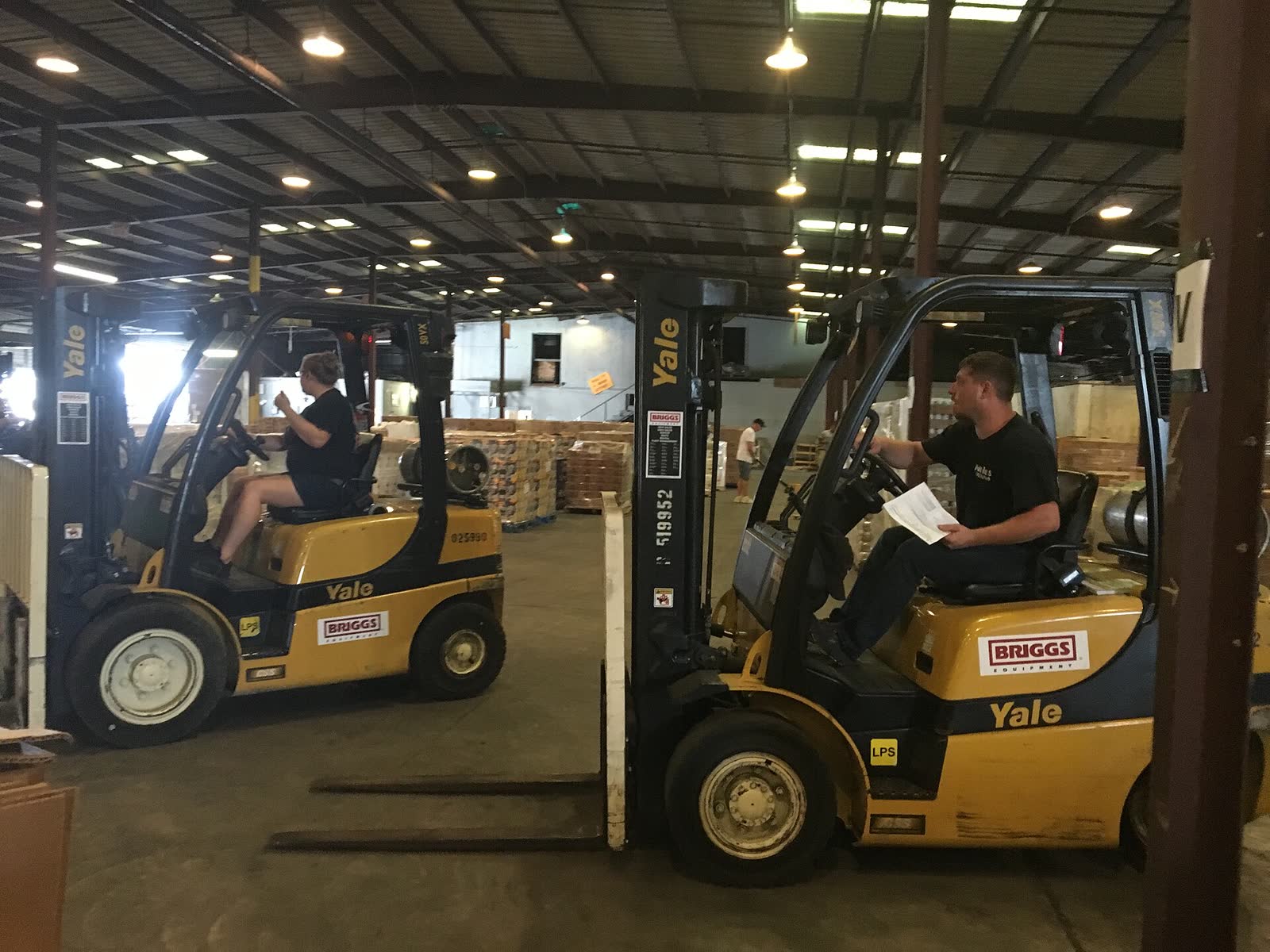

The official topic list behind every test
The standard requires initial training in three buckets (skippable only where the employer can demonstrate a topic does not apply to their workplace):
- Truck-related topics — operating instructions and warnings, how the truck differs from a car, controls and instrumentation, engine or motor operation, steering and maneuvering, visibility, fork and attachment adaptation, vehicle capacity, vehicle stability, inspections the operator must perform, refueling and battery charging, and operating limitations.
- Workplace-related topics — surface conditions, load composition and stability, stacking and unstacking, pedestrian traffic, narrow aisles and restricted places, hazardous (classified) locations, ramps and slopes, ventilation and exhaust buildup, and anything else unique or hazardous on site.
- The requirements of the standard itself — who may operate, training and evaluation duties, refresher triggers, and the three-year evaluation cycle. Official source
How those topics become test questions
Here is the map from outline to question, section by section, with the kind of item you will meet in each drill:
| Study section | What it draws from | Typical question |
|---|---|---|
| Certification & Training | 1910.178(l) + child labor rules | How often must performance be evaluated? (At least every three years.) |
| Safe Operation | 1910.178(m)-(n), (k) | What is "unattended"? (Operator 25 ft away in view, or out of view entirely.) |
| Loads & Stability | 1910.178(o), (a)(4)-(6), Appendix A | What is load center? (Horizontal distance from load edge to the center of gravity's line of action.) |
| Inspection & Maintenance | 1910.178(p)-(q), (f)-(g), (b) | How often are trucks examined? (Before each service, at least daily; each shift on round-the-clock use.) |
Test writers love the items with hard numbers — the three-year evaluation cycle, the 25-foot unattended rule, the 10-percent grade rule, the 8-foot railroad parking ban — because they are easy to grade and easy to miss. Our full question bank shows all 68 questions with worked explanations, so you can see exactly how each topic turns into a multiple-choice item. If a definition-style item trips you up ("What is load center?"), the forklift terms glossary has every standard-defined term in one table, and our pedestrian safety guide covers the people-on-the-floor rules that show up as scenario questions.
Questions that catch people out
Three patterns produce most of the wrong answers on real exams:
- The near-miss pair. "Refresher training" and "the three-year evaluation" are different duties with different triggers — questions deliberately swap them. Drill certification topics until the pair separates cleanly.
- The stability trap. People memorize "load center" as a definition but cannot apply it: a 60-inch load on a truck rated at a 24-inch load center does not carry rated capacity — it carries less. Work the worked example in loads and stability.
- The "everyone knows" rules. Elevated forks, riding on trucks, and parking distances feel like common sense, which is exactly why candidates skim past the exact figures. Common sense is not a number; the test grades numbers.
Practice the map, not the answers
Because every exam draws from the same outline, the fastest study route is section by section: drill a topic until your misses stop repeating, read the cited explanation for every miss, then sit the timed practice test to confirm it holds under the clock. If you only have one evening, spend it on the sections where your drill accuracy sits under 80% — that is where exam questions will find you.
FAQ
Are these the exact questions on my employer's forklift test?
No — your employer's exam is private to them, and no honest site can promise its exact items. But every written forklift test draws from the same OSHA training outline, so mastering these topics and question types prepares you for any of them.
Do forklift test questions include math?
Usually one or two items at most, typically capacity or load-center logic. Our loads and stability drill includes the worked load-moment calculation the OSHA guidance appendix itself uses as its example.
Is the pre-shift inspection on the test?
Yes, in both halves: the written exam asks about examination requirements (daily, and after each shift on round-the-clock operation), and your hands-on evaluation almost always includes performing a pre-shift inspection.