Forklift Pedestrian Safety: The OSHA Rules for People on the Floor
The OSHA rules that protect people walking near forklifts: no driving up to people at fixed objects, nobody under elevated forks, horn at blind spots, and the pedestrian training duty.
Quick answer: the standard protects pedestrians with hard rules on the truck side — never drive up to a person standing at a fixed object, never let anyone stand or pass under elevated forks, slow down and sound the horn where vision is obstructed, and never rely on the blue light alone. The employer side adds a training duty: pedestrian traffic is a required topic for every operator. Official source
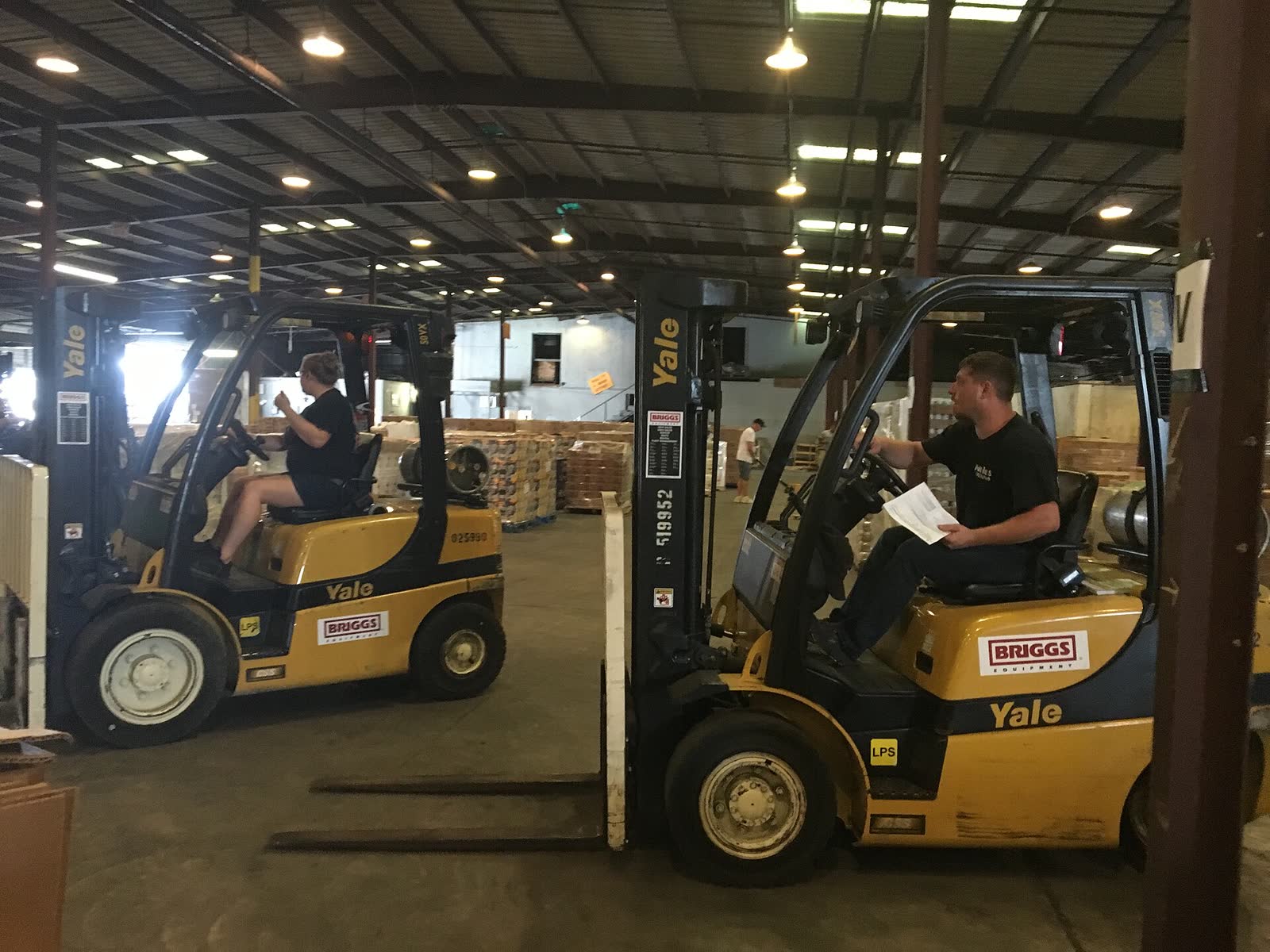

The four truck-side rules that protect people
1. No driving up to people at fixed objects. Trucks shall not be driven up to anyone standing in front of a bench or other fixed object. A person pinned between an approaching truck and a bench has no escape path — the operator must never create that geometry. Official source
2. Nobody under elevated forks — ever. No person stands or passes under the elevated portion of any truck, loaded or empty. Hard hats and job titles make no difference; an elevated carriage is stored energy. Official source
3. Horn and speed at blind spots. Slow down and sound the horn at cross aisles and anywhere vision is obstructed, keep the truck at a speed that permits stopping in a safe manner, and avoid loose objects on the floor that could cause loss of control. Official source
4. Direction of travel = direction of vision. The driver looks in the direction of travel and keeps a clear view of the path; if the load blocks the forward view, travel with the load trailing — in reverse. Official source
The employer-side duties people don't see
Pedestrian safety is not only a walk-around rule — the standard makes it a curriculum item:
- Pedestrian traffic in areas where the vehicle will operate is a required workplace-related training topic — every operator learns where people walk before being authorized. Official source
- Aisles and passageways stay clear: fire aisles, access to stairways and fire equipment are kept clear of truck traffic and storage. Official source
- Refresher triggers include people: an accident or near-miss involving a pedestrian, or a change in workplace traffic patterns, requires refresher training before the operator continues. Official source
What the standard does not do is fix warehouse layout or mandate specific pedestrian barriers — those are employer engineering choices under the general duty to keep the workplace hazard-free. That is why real facilities vary so much, and why operator behavior rules carry the load. The operational skills behind these rules are drilled in the safe operation section — blind intersections, load-trailing travel and rear-wheel steering are all pedestrian-struck-by scenarios in training form.
What this means in practice
For operators: the pedestrians have right of way, always; the horn is a tool, not an apology; and tail swing on rear-wheel steering is the struck-by hazard people never see coming. For pedestrians: make eye contact before crossing an aisle, never assume the operator sees you around a load, and treat an elevated load as a no-go zone on every side. For supervisors: pedestrian traffic patterns belong in every operator's workplace-related training — and the full question bank shows how these rules appear on tests, alongside the certification rules that define who may operate at all.
FAQ
Do pedestrians have the right of way over forklifts?
The standard requires operators to maintain a safe distance, keep full control, and yield in the sense that people always come first operationally — but the enforceable OSHA text places the duties on the truck: no driving at people near fixed objects, horn and slow speed at blind spots, clear view of travel. Warehouse policies typically make pedestrians the explicit right of way.
Are blue spot lights required on forklifts?
No specific OSHA paragraph mandates them. Blue lights and audible alarms are common engineering controls employers add; they support — but never replace — the operator rules: horn, speed control, and clear view of travel.
What training covers pedestrian safety?
Every operator's initial training must include pedestrian traffic in the operating areas, plus surface conditions and narrow aisles. Refresher training is triggered by any accident or near-miss — including ones involving people on foot.